VersaBadge vs. Other Rounding Solutions for Behavioral Health
VersaBadge vs. The Checkbox: What Actually Gets Recorded
How VersaBadge Compares to Other Rounding Solutions
VersaBadge brings rounding compliance, staff duress alerting, continuous patient location, elopement monitoring, bed exit detection, asset tracking, and hand hygiene monitoring together on one platform. Most single-purpose rounding solutions address rounding compliance alone.
VersaBadge is built around location intelligence, safety, and operational visibility, with EMR integrations that keep clinical documentation where it already lives. The comparison below is most relevant for facilities that want to strengthen rounding compliance while also improving safety and visibility across the organization.
What Missed Rounds and Fragmented Systems Really Cost
Behavioral health facilities often begin with rounding because the stakes are immediate: missed or unverifiable observations can contribute to patient harm, compliance failures, investigations, and financial or legal exposure. Reliable rounding is not just a workflow issue; it is a core safety and risk-management requirement.
That makes the vendor decision bigger than choosing a tool that simply says a round occurred.
A single-purpose platform may address the compliance need, but it can become limiting as priorities expand. Staff duress, elopement monitoring, patient location, asset tracking, and other safety needs can mean another RFP, another implementation, another training cycle, and another vendor relationship.
There is also a visibility cost. When rounding, staff safety, and patient movement live in separate systems, each platform tells only part of the story. Leaders may know that a round happened without understanding the broader context around it.
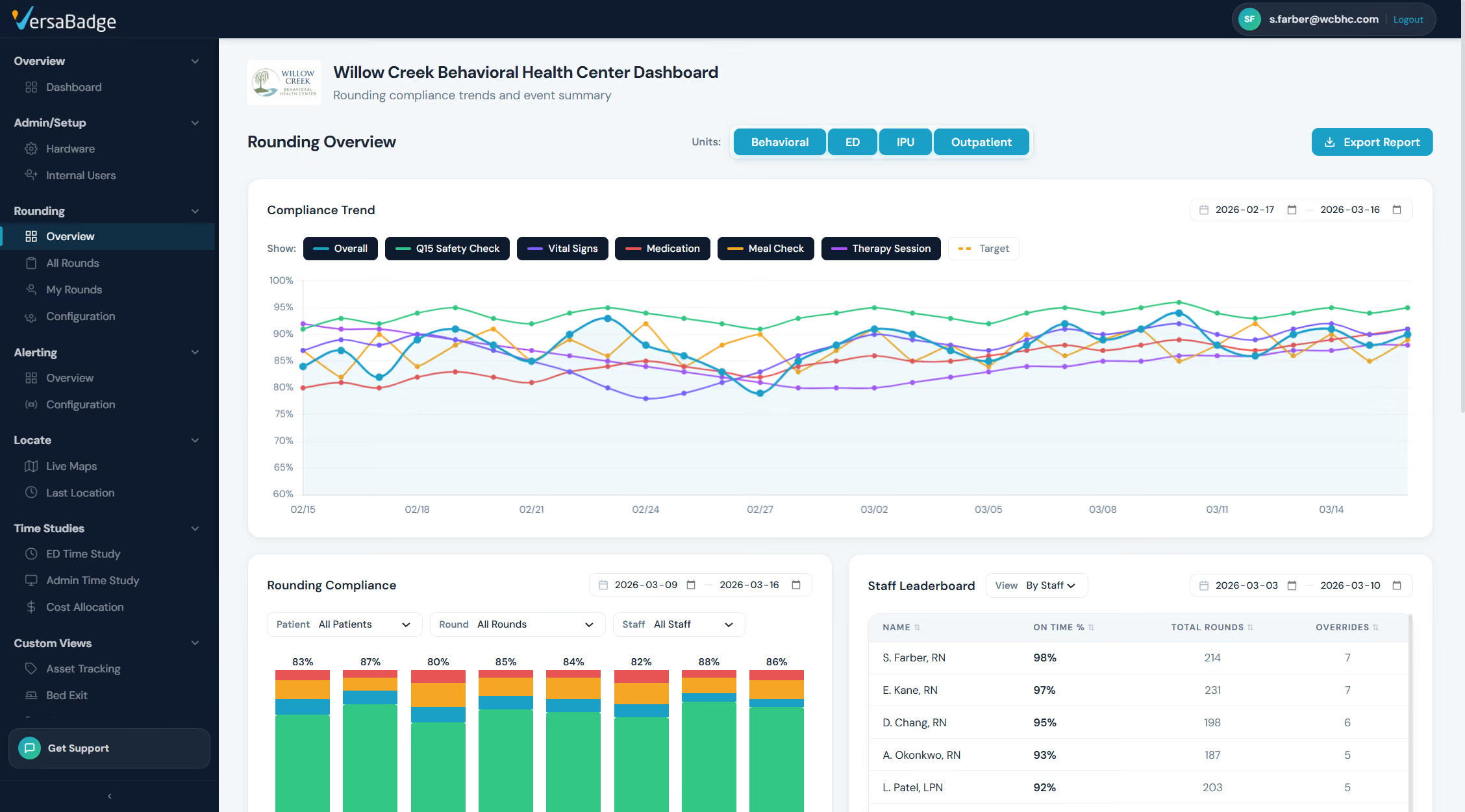
With VersaBadge, facilities can expand into additional use cases using the same badges and location-aware infrastructure already in place, giving staff a more consistent experience and leadership a more complete view of safety and operations across the organization.
Click through the interactive tour below
Questions Worth Asking Any Rounding Vendor
For a Director of Nursing evaluating rounding solutions at a psychiatric hospital, SUD facility, or residential treatment program, the real decision rarely comes down to a feature list. It comes down to liability, survey readiness, staff safety, and how much a new system changes day-to-day risk on the unit. These are the questions worth asking any vendor, regardless of which one is being considered.
How do you know rounding checks are actually happening as documented?
Manually documented safety checks are commonly found to be incomplete or inaccurate industry-wide, since paper and EHR entries both rely on staff to self-report after the fact. VersaBadge validates each round through proximity verification between staff and patient wristbands or location reference beacons, so the documented record reflects what actually happened, not just what was entered.
Does the system still work reliably in units with poor Wi-Fi coverage?
Facilities with older buildings, spotty Wi-Fi, or community-based care should ask any rounding vendor how their system performs when Wi-Fi is unavailable. VersaBadge’s app can use the device’s existing cellular connection, allowing staff to document rounds whether they are on the unit or out in the community.
How customizable is the platform to your facility’s workflows?
Every behavioral health facility operates differently. Ask whether the vendor can adapt rounding intervals, observation types, escalation rules, user permissions, reporting, and workflows to fit your existing processes, or whether your team will need to change how it works to fit the software.
What does the client relationship look like after implementation?
Implementation should not be the end of the vendor relationship. Ask how the vendor supports clients after go-live, how often they engage with your team, how quickly issues are addressed, and whether they proactively help you improve adoption and expand the value of the platform over time.
How does the system protect data integrity and handle manual overrides?
Rounding data is only valuable if leadership can trust it. Ask how the platform prevents records from being altered after the fact, how manual entries or overrides are handled, whether changes are clearly identified, and what audit trail exists to show who made a change, when it was made, and why.
You Have Questions.
We Have Answers.
Can a facility start with rounding only and add other use cases later?
How does VersaBadge apply to behavioral health specifically?
How long does VersaBadge take to implement?
How much does VersaBadge cost?
Why do behavioral health facilities choose VersaBadge over a single-purpose rounding tool?