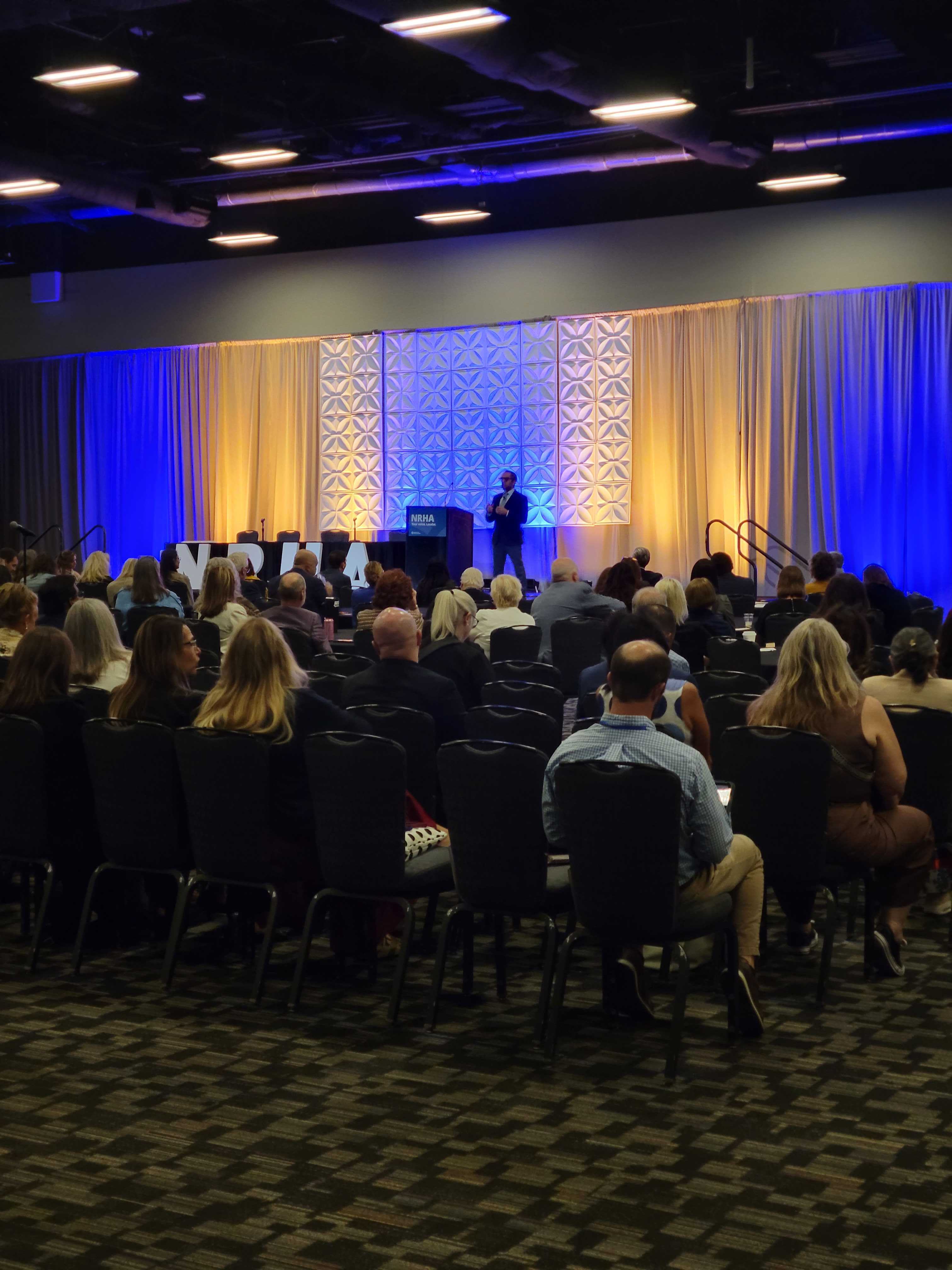


We just returned from a focused few days in Washington, D.C., at NRHA’s 37th Rural Health Policy Institute. The event brought rural healthcare leaders, state associations, and providers together for policy briefings, advocacy strategy sessions, and meetings on Capitol Hill.
This year’s conversations centered on financial sustainability, workforce pressures, and the importance of clear, consistent advocacy in an evolving federal policy environment.
If you weren’t able to attend, here are a few themes that stood out:
Policy Priorities and Financial Stability
Reimbursement remains central to the long-term viability of rural hospitals. Medicare and Medicaid payment structures, regulatory burden, and ongoing financial fragility continue to shape daily operations.
In his remarks to attendees, Dr. Mehmet Oz addressed CMS priorities, including program integrity, modernization, and protecting Medicare’s sustainability. The message, in short, was that future policy direction will emphasize accountability and efficiency. For CAHs already operating on thin margins, how those priorities are implemented will matter significantly.
Throughout the week, leaders emphasized the importance of specificity. Policymakers respond to concrete examples tied to defined requests. When hospital executives can show how a payment change affects emergency coverage, swing bed capacity, or staffing levels, the discussion becomes grounded in operational reality.
Rural hospitals must be prepared to connect federal decisions directly to access, workforce stability, and financial performance in their own communities. The Policy Institute provided a valuable setting to sharpen that message, align around shared priorities, and strengthen how rural leaders advocate for their communities.
Data, Storytelling, and Strategy
One theme surfaced repeatedly throughout the week: data alone rarely changes minds. Spreadsheets and margin analyses are necessary, but they do not carry the same weight as the story of a patient who had to drive two hours for emergency care or a family impacted by the loss of a local service line. Numbers explain the problem. Stories make it real.
That does not mean abandoning data. It means using it well. The most effective advocacy pairs clear metrics with lived experience and connects both to a specific policy decision. When a hospital leader can say, “Here is what this reimbursement change means for our margin, and here is what it means for the patients we serve,” the conversation shifts from abstract policy to community impact.
As Dr. Carrie Cochran-McClain, Chief Policy Officer at NRHA, reminded attendees, “Your voice matters, members of Congress need to hear from you, and NRHA is here to help you do that.” That message resonated throughout the Institute. Rural leaders cannot assume their realities are understood in Washington. They must articulate them clearly, consistently, and with purpose. That framework shaped the first day of the Institute and set the tone for what came next: taking those messages directly to lawmakers.
Taking Rural Voices to Capitol Hill
Capitol Hill Day is where preparation turns into action. Armed with clear policy priorities and stories from their communities, rural leaders met directly with Members of Congress and legislative staff.
VersaBadge Directors Leah and Angie joined leaders from their respective home states, Maine and Florida, to ensure that federal policy discussions reflected the lived realities of rural hospitals, clinicians, and the patients who rely on them.
In each meeting, the focus stayed on protecting and expanding access to care in rural communities. Conversations addressed the implications of HR1 (OBBBA), the Rural Health Transformation Program, and key legislative priorities advanced by the National Rural Health Association. Leaders shared firsthand examples of workforce shortages, reimbursement pressures, and service line closures that affect whether patients can receive timely care close to home.
Rural healthcare should never be reduced to partisan talking points. It is about whether a mother can safely deliver her baby in her own community, whether a farmer can access emergency care within the golden hour, and whether seniors can manage chronic conditions without traveling hours for treatment. Re-centering the conversation on access, sustainability, and patient safety remains essential.
We encourage all rural healthcare stakeholders to review NRHA’s legislative priorities and consider how these policies support the long-term stability of rural hospitals and the communities they serve.
Community and Connection
Beyond the policy sessions, the Institute reinforced something equally important: rural leaders are not navigating these pressures alone. The challenges may vary by state, but the underlying issues are shared.
Events like this create space to compare strategies, strengthen partnerships, and align advocacy efforts. Rural health policy ultimately moves forward because leaders show up, share real data, and speak plainly about what their communities need.
We’re grateful to have participated and to stand alongside others working to protect sustainable rural healthcare.
Our team is looking forward to continuing these conversations at NRHA’s upcoming Rural Hospital Innovation Summit in May. If you’ll be there, we hope to connect.
If we missed you in Washington, we’d still love to connect. Whether you’re navigating reimbursement changes, preparing for future policy shifts, supporting your workforce, or improving cost report accuracy, VersaBadge is here to help.
Learn more about VersaBadge, book a discovery call.